I enjoy walking labyrinths. Labyrinths are maze-like structures that have been used as spiritual tools for centuries. There are many of them around, and I am in the habit of trying to visit a lot of them. For more information about labyrinths, check out The Labyrinth Society. Find where labyrinths are in your area at the Worldwide Labyrinth Locator.
At my last spiritual direction session a few weeks ago, my director and I discussed how I like being “at the edges” of things. I love to sit at the edge of a river or a lake — I’m not drawn to boating or swimming, just being at the edges. I find meaning in liminal places, where the land meets the water, or where the forest meets the field, or where the road meets the grass. I find meaning in liminal times, when one job ends and another begins, when childhood ends and adulthood begins, when transitions occur. This doesn’t mean that I always enjoy those times, but I always find the most meaning there. I’m drawn to them.
So as I drove toward Zwingli United Church of Christ, I planned to enter this labyrinth with the question, “What is it that draws me to edges?” I didn’t expect how beautifully, how perfectly, this particular labyrinth would help me find an answer.

This labyrinth is very near the edge of the property of Zwingli UCC, where it meets Holly’s Hill Park. The entry on the Labyrinth Locator mentioned that you could access it from the park, and I found that there was a break in the tree line border allowing just that. The labyrinth is a 7-circuit classical, with a grass path and inlaid brick walls. I’ve walked many labyrinths with this structure, but this one was getting overgrown. The grass was lush, and the bricks were deeply set. I found that I couldn’t see the back half of the labyrinth at all. The front half was unkempt, but easy enough to follow. I tried to walk it, and found the walk very interesting. I’ve walked enough classical labyrinths to have a pretty good sense of their shape, and the front half gave me some direction and assurance whenever I got there. Whenever I was in the back, though, I just walked on trust and memory. It was a little awkward, but it worked.
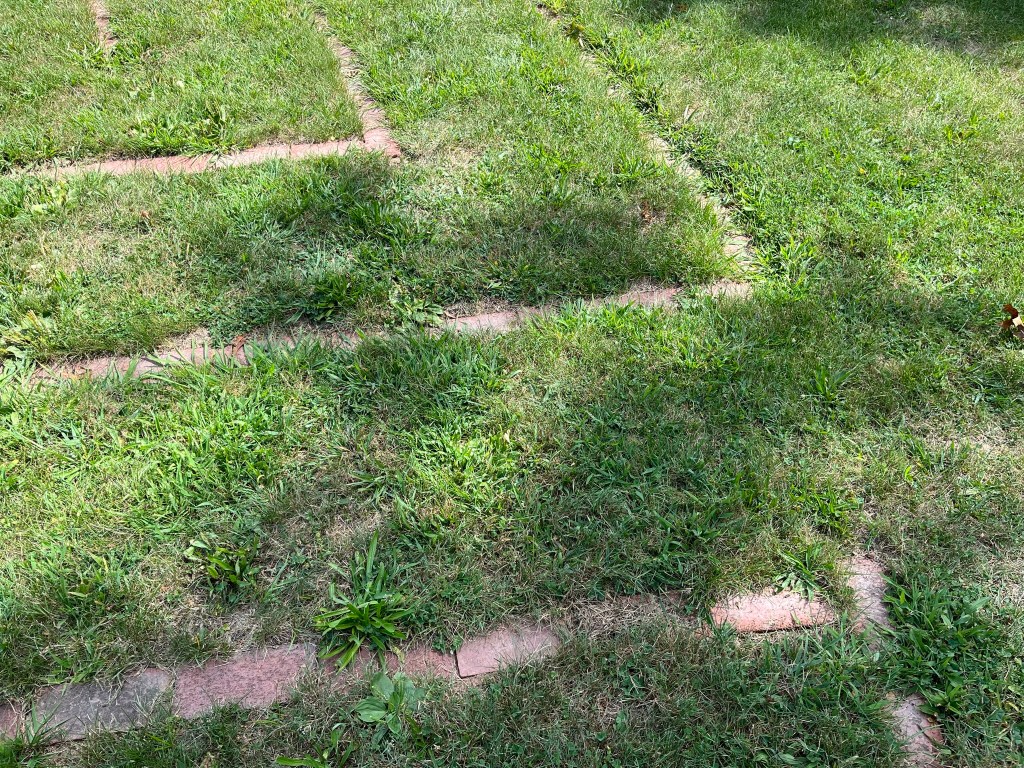
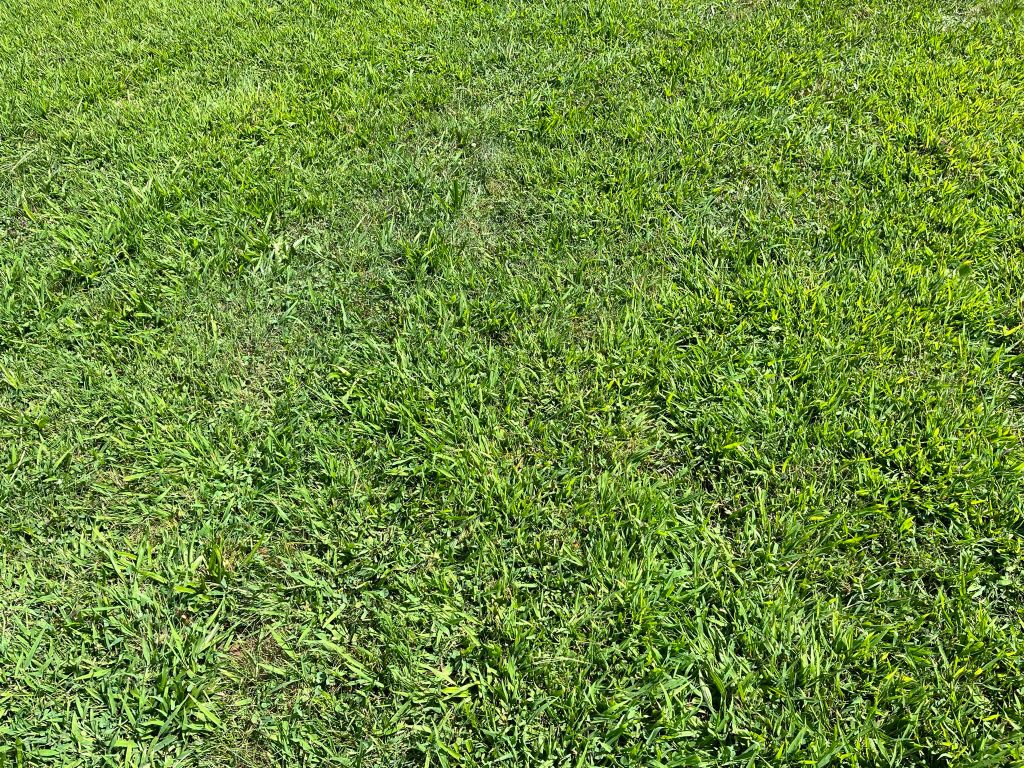
I reflected that there were edges in the front half, but not in the back. The walls formed an edge for me, the dividing line between two parts of the path. And when I was walking between those edges, my way was clear and simple. When the edges were unseen, it was much harder to know where to go, but I was still able to do it, thankfully.
I reflected further that for me there is a clarity and a presence at edge places, at edge times. I always feel more real in places like that, more real and alive. I was sitting on a tree stump at the edge between the church and the park as I reflected. It was shady and there was a nice breeze. It felt right. It felt like the breeze was the “still, small voice” of God. I felt God’s presence here. I wondered about the “thin places” that Celtic spirituality speaks about, the places where the boundaries between this world and the spiritual world are “thinner” than elsewhere. Is this something like that? Are edges something like thin places?
No wonder I like labyrinths so much, and find so much meaning there — in a sense, a labyrinth is one long intricately curved edge, leading and guiding and providing clarity. I also wondered if there is a way I could find more thin places, more thin times. Did I need to travel like this? Or is it something available through meditation or something like that? That’s what I’d bring into the next labyrinth…



 Scholtes-Blog
Leave a comment